







Healthy Mom&Baby

Postpartum Mood Disorders: What Moms Need to Know

by: Danielle Beasley, PhD, RN, RNC-OB, CNE

Postpartum Mood Disorders: What Moms Need to Know

Share this story

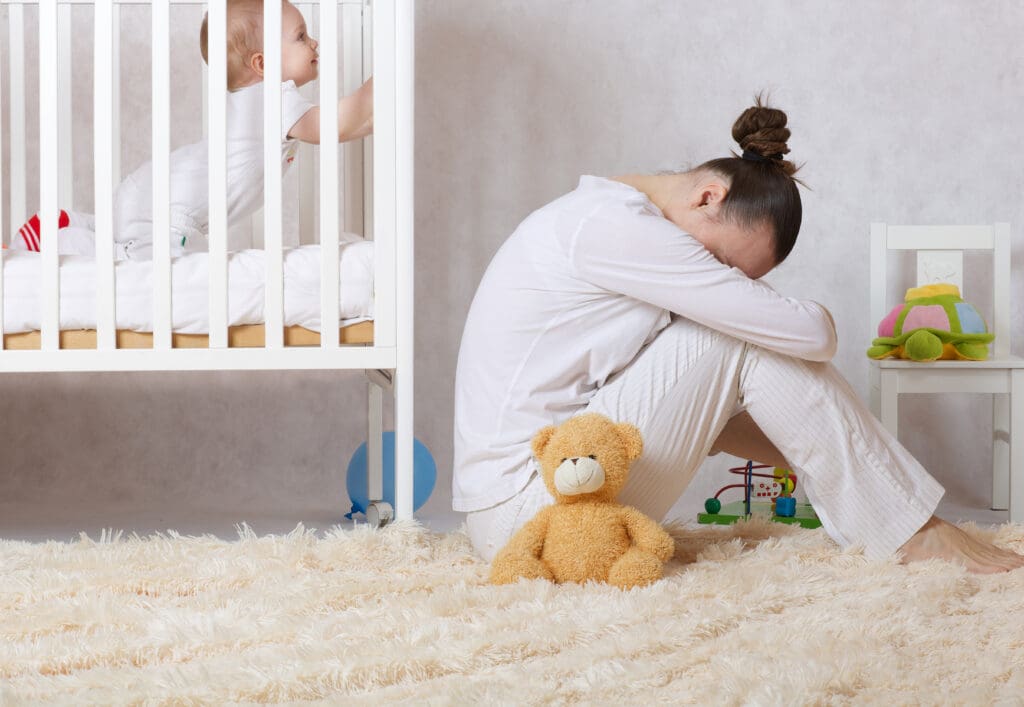
Postpartum mood disorders can occur among women with a healthy pregnancy and birth.

Every woman transitions to motherhood differently. Up to 80% of new moms suffer from the baby blues, experiencing mild anxiety, crying and restlessness that goes away within the first two weeks after giving birth—once your hormones level out. If these feelings get worse or last longer than a couple of weeks, you may be experiencing a postpartum mood disorder. Talk to your nurse or healthcare provider right away. Seeking help can prevent your symptoms from worsening.

Postpartum Anxiety

Postpartum anxiety strikes 1 in 10 women, who feel overly anxious and worried and have trouble sleeping. Postpartum anxiety, left untreated, often turns into postpartum depression.

Postpartum Obsessive-Compulsive Disorder

A form of postpartum anxiety is obsessive-compulsive disorder which involves repetitive actions such as exaggerated cleaning and double-checking on things that you perceive as a danger to your newborn.

Postpartum Depression

Postpartum depression is the most common postpartum mood disorder—1 in 7 women experience it. Symptoms include crying more than usual, anger, feeling numb or disconnected from baby, doubting your ability to care for baby, worrying you will hurt baby, and withdrawing from loved ones. Postpartum depression is more severe than the baby blues and postpartum anxiety, lasting beyond a couple of weeks postpartum. Without treatment, it can last for months, even years. You may, or may not, have risk factors for postpartum depression (see box). Most women don’t seek help, but postpartum depression rarely goes away on its own, so it’s important to get help from a healthcare professional.

Postpartum Psychosis

Postpartum psychosis, a rare disorder affecting 1 in 1,000 women, usually develops in the first two weeks postpartum. Symptoms include thoughts of harming yourself or baby, hallucinations or delusions, extremely disorganized behavior, confusion or cognitive impairment that may come and go.
Risk factors are a past history of a psychotic episode or bipolar disorder. If you feel that you may have postpartum psychosis, seek the help of a healthcare professional immediately.

Helpful resources

Read more about postpartum mood disorders at Postpartum Support International and the National Institute of Mental Health.

Read more:
New Dads Can Have Postpartum Depression, Too

Breastfeeding & Postpartum Depression
Do You Have Postpartum Depression?

Share this story

AUTHOR

Danielle Beasley, PhD, RN, RNC-OB, CNE

Danielle Beasley, PhD, RN, RNC-OB, CNE, is a faculty program director in the Bachelor and Master of Science nursing programs at Excelsior University School of Nursing. Her extensive nursing career has focused on maternal-child nursing, specifically obstetrics. She’s a simulation expert and has created several clinical-based scenarios spanning medical-surgical, pediatric, and obstetrical nursing. Dr. Beasley’s published works emphasize the health and well-being of women and neonates and her research includes antepartum and postpartum depression, preeclampsia, and postpartum hemorrhage. Dr. Beasley is a member of Sigma Theta Tau International Honor Society of Nursing and Southern Nursing Research Society. Dr. Beasley chairs various committees and has received numerous awards for her academic leadership.

Latest News

Expecting Answers