








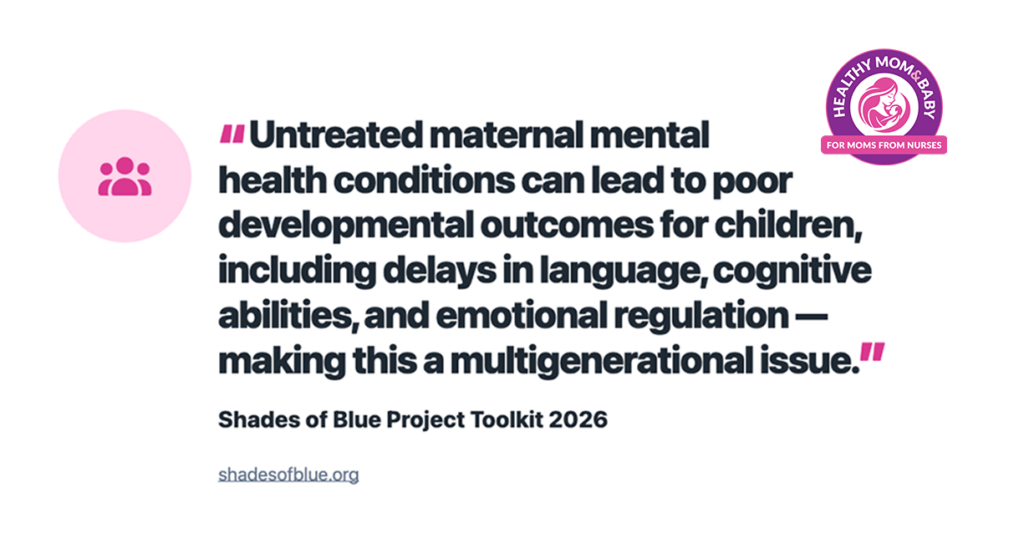
A mother’s mental health is never only about the mother. If you experience a maternal mental health issue and it goes untreated, the effects can reach your child’s development—language, thinking, and ability to adapt to their environment.
That is what makes maternal mental health a multigenerational issue, and why the people supporting you matter so much.
When a Mental Health Condition is More Serious
While all mental health conditions are worthy of concern and treatment, certain conditions are more likely to require immediate expert intervention because of the risk of permanent harm.
During Black Maternal Mental Health Week, many community organizations have an opportunity to share the services they provide throughout the year. Programs may include support groups, educational workshops, and activities that support you and your children while you’re receiving treatment for a mental health condition.
Post-traumatic Stress Disorder (PTSD) and Postpartum Psychosis
Post-traumatic stress after birth can follow a difficult, frightening, or disrespectful birth experience. Symptoms of PTSD can include nightmares, flashbacks, panic attacks, avoidance of reminders of the experience, or feeling detached from your own body or your new baby.
Birth trauma can happen even if your baby was born healthy. If a clinician mistreats you or doesn’t take your concerns seriously during labor or after you’ve given birth, having a healthy baby may be a relief, but it doesn’t erase what happened to you.
Postpartum psychosis is a rare and serious medical emergency. Symptoms may include seeing or hearing things that are not there (hallucinations), believing things that are not true (delusions), extreme confusion, disorganized speech or behavior, not sleeping for a long time, unusual worrying, paranoid feelings, or thoughts of harming yourself or your baby.
If you experience any of the above symptoms, even just one, do not wait for an appointment with your provider. Call 911, go to the nearest emergency room, or call 988.
If Your Loved One Just Gave Birth and You Suspect a Serious Mental Health Issue
If your friend or loved one just gave birth, you may find yourself asking how they feel quite often. However, don’t wait for them to ask for help. Many won’t; they may be embarrassed, exhausted, or convinced they should be able to handle everything themselves.
Ask direct questions: “How are you really feeling?” “Are you having thoughts that scare you?” “Do you feel safe?”
Offer specific help; don’t just say, “let me know if you need anything.” A few examples of things you might say are:
- “I’m coming over at 2:00 to hold the baby while you shower.”
- “I’ll call your provider with you.”
- “I’ll drive you to the emergency room.”
- “I’ll stay with you until your partner gets home.”
If your friend or loved one says she might hurt herself or the baby, do not leave her alone. Call 988, call 911, and go with her to the hospital emergency department. In this instance, you may need to reach out and ask someone else you trust to watch the baby for a few hours.
If the New Mom is Your Partner
As the parent of the baby, you may feel a loss of control if your partner experiences a mental health issue after giving birth. Your job is not to diagnose her. It is to notice she’s not okay, listen, believe her, and help her get care.
Watch for sadness, panic, rage, withdrawal, not sleeping or eating, or saying the family would be better off without her.
Ask direct questions plainly, then act—watch the baby so she can sleep, make the appointment, drive her there, sit in the waiting room.
Don’t argue with her feelings. Instead, try reassuring her by saying “the baby is healthy,” and use other phrases that can validate her feelings. Say things like: “I believe you.” “You are not a bad mom.” “This is a health issue, and we are getting help.” “I am staying with you.”
Support for You – A New Mom and Your Children
When your partner, clinicians, and local organizations work together to support you if you experience postpartum depression, anxiety, post-traumatic stress disorder, postpartum psychosis or other mental health challenge, the benefits trickle down to your children.
The right support system can help you start and continue breastfeeding, bond with your baby, ensure your baby sleeps safely, and keep all medical appointments for you and your baby.
If at any time you need support, save the number for the National Maternal Mental Health Hotline in your phone and call 1-833-TLC-MAMA (1-833-852-6262).
Call 988 if you’re experiencing a mental health crisis and call 911 in an emergency.