








Pregnancy, birth and life with a new baby can bring joy and excitement, as well as worry and exhaustion. As you adapt to the changes, expect some days will be tougher than others.
If you begin to notice that your feelings of sadness, fear, panic, anger, scary thoughts, or hopelessness increase or don’t go away, you may have more than just the stress of being a new mom, or the “baby blues.” You could be experiencing a more serious mental health condition—and you’re not alone.
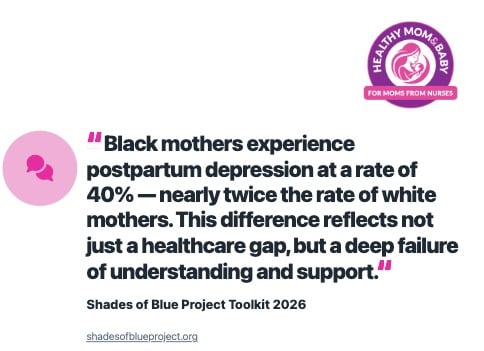
During Black Maternal Mental Health Week, July 19–25, one number makes the stakes clear: Black mothers experience postpartum depression at nearly twice the rate of white mothers. That gap is not just about healthcare access. It’s about whether you feel heard, believed, and supported when you say something is wrong.
Mental Health Conditions are Medical—and Treatable
Mental health conditions that you experience during pregnancy and after your baby is born are 100% medical concerns. They’re not all in your head, they’re not signs of weakness, they’re not bad parenting, and they’re definitely not evidence you don’t love your baby. If you have a mental health concern, you deserve to be heard, believed, and supported when you voice that concern.
The first step to getting help is recognizing what may be happening, then contacting someone you trust to ask for help. As a Black mom, you may be faced with extra barriers like not being taken seriously, not having enough access to mental health care, feeling judged, or carrying emotional scars from past experiences in which your health concerns were dismissed.
What Does Postpartum Depression Look Like?
In the first few hours and days after you give birth, you may feel overwhelmed, moody, or anxious. These feelings are normal and are often called the “baby blues.” When these feelings don’t go away or become worse, they may be symptoms of postpartum depression:
- Sadness, hopelessness, guilt, or crying often.
- Mood swings, irritability, or trouble sleeping.
- Feeling numb or losing interest in things you usually enjoy.
- Feeling disconnected from your baby or feeling like your family would be better off without you.
If you’ve had any of these symptoms for more than a couple of weeks and they keep getting worse, make you feel unsafe, or make it hard to care for yourself or your baby, you may need treatment. Call your pregnancy care provider, primary care provider, midwife, nurse, or mental health professional.
Keep in mind that even with postpartum depression, you may still feed, hold, and care for your baby. You may look “fine” from the outside. That does not mean you are fine.
Sources of Support You Can Trust
If you recognize your symptoms in this article, there are trusted nationwide resources designed to hear you and help you. There are also family, friends, and your healthcare team that you can reach out to.
National Maternal Mental Health Hotline
Call or text 1-833-TLC-MAMA. Free, confidential, 24/7. Help is available in 60+ languages.
Postpartum Support International (PSI)
Call 1-800-944-4773 or visit postpartum.net
Connects families to trained providers and support groups for perinatal mood and anxiety disorders.
Shades of Blue Project
Dedicated to helping women of color with community resources, mental health advocacy, treatment, and support.
Your Care Team
Your team includes your OB-GYN, midwife, nurse, primary care provider, therapist, doula, and baby’s pediatrician. Share openly what you’re feeling with one of them.
Emergency
If you are in crisis, call or text 988. If you feel you are in immediate danger of hurting yourself or your baby, call 911.