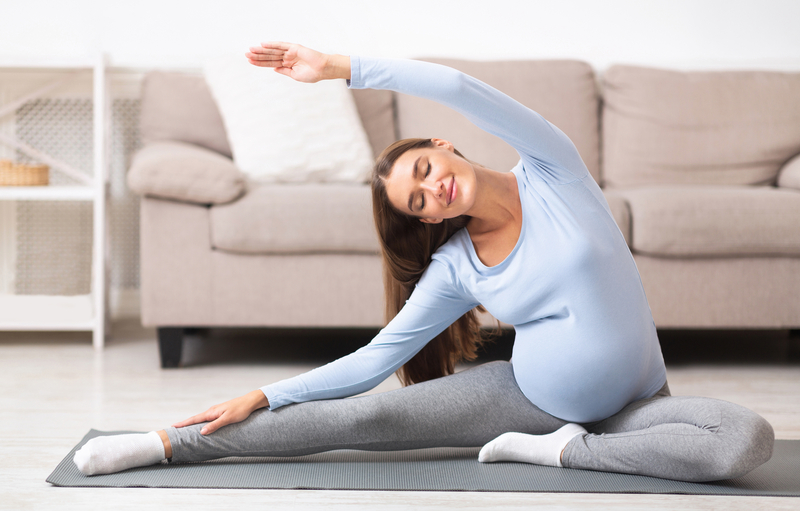







Pregnancy is a time of extraordinary changes for your body. Taking control through exercise empowers you to feel stronger and be more capable. Pilates connects you more deeply to your body while also making you feel more flexible. You can find classes specifically for pregnant women, so that you can benefit from the strengthening and conditioning of Pilates during pregnancy through labor, birth and recovery.
How Pilates Affects Your Pregnancy
Six things happen when you practice Pilates during pregnancy:
Easier Breathing
As baby gets bigger, you’ll find it harder to breathe, especially to take a deep breath. Your lung capacity hasn’t changed—baby is exerting upward pressure on your diaphragm. Pilates breathing techniques pull your rib cage out, letting your lungs expand sideways, allowing you a deeper, fuller breath. Breath is also important during labor, and Pilates breathing will help you when the time comes for baby’s birth.
Less Discomfort
Pregnancy is uncomfortable! From indigestion, backaches, and the emotional highs and lows, discomfort can be eased by Pilates with its focus on posture and alignment. As baby grows, your muscles are taxed to support your belly and hold you upright. Pilates strengthens your hips, core and pelvis, stabilizing your lower back and improving posture. Ah, relief!
Pelvic Floor Strengthening
Pelvic floor exercises are essential in pregnancy. The pelvic floor and core muscles strengthened during Pilates support your lower abdominal organs. More pressure is put on the pelvic floor as baby grows. Practicing Pilates exercises in pregnancy can help you feel both the contraction and release of the pelvic floor muscles during birth and postpartum.
Supports Birth
You’ll reach a point late in pregnancy when you come to grips with the fact that baby has got to come out of your body somehow, and it’s not going to be easy. Being physically fit is going to make it easier, whether you birth vaginally or recover following a cesarean. Birth requires stamina, which Pilates builds for the hours of labor ahead. Every single workout that you do before labor and birth is one that you’ll thank yourself for!
Faster Recovery
This is about more than just “getting your body back.” What’s most important is that your body is healthy in recovery. You need strength and endurance even more in recovery, as you’re also caring for your newborn. That care requires bending and lifting with strong shoulders, arms and core muscles, and it requires flexibility.
Prepare for Childcare
Because Pilates is a dynamic workout system, you get stronger in movement rather than in held positions. This means you’ll be prepared and have the strength to go through the moves and motions needed to carry, lift, hold and care for your new baby. Note that Pilates helps to prevent diastasis recti (a separation of abdominal muscles after pregnancy) by improving the strength and tone of the transverse abdominis muscle. Unlike other workout regimens that focus on your “six pack,” Pilates works your entire core, helping to prevent this common serious postpartum complication.
Each pregnancy is different, so whether this is your first baby or your fifth, being strong and physically fit before and during pregnancy is going to make the whole process easier and get you to feeling great faster postpartum, so that you can take care of your little one.
Know Your Limits
Your body has limits during pregnancy to keep you and baby safe:
- Avoid lying on your back—this puts undue pressure on your spine, back and blood vessels
- Always stand on both legs—your risk of falling increases as your balance is challenged
- Move slowly through stretches in your normal range of motion—during pregnancy, the hormone relaxin makes ligaments looser and more flexible, putting you at risk for taking stretches and movements too far and risking injury
YOU MAY ALSO LIKE: Safe Exercise in Pregnancy