
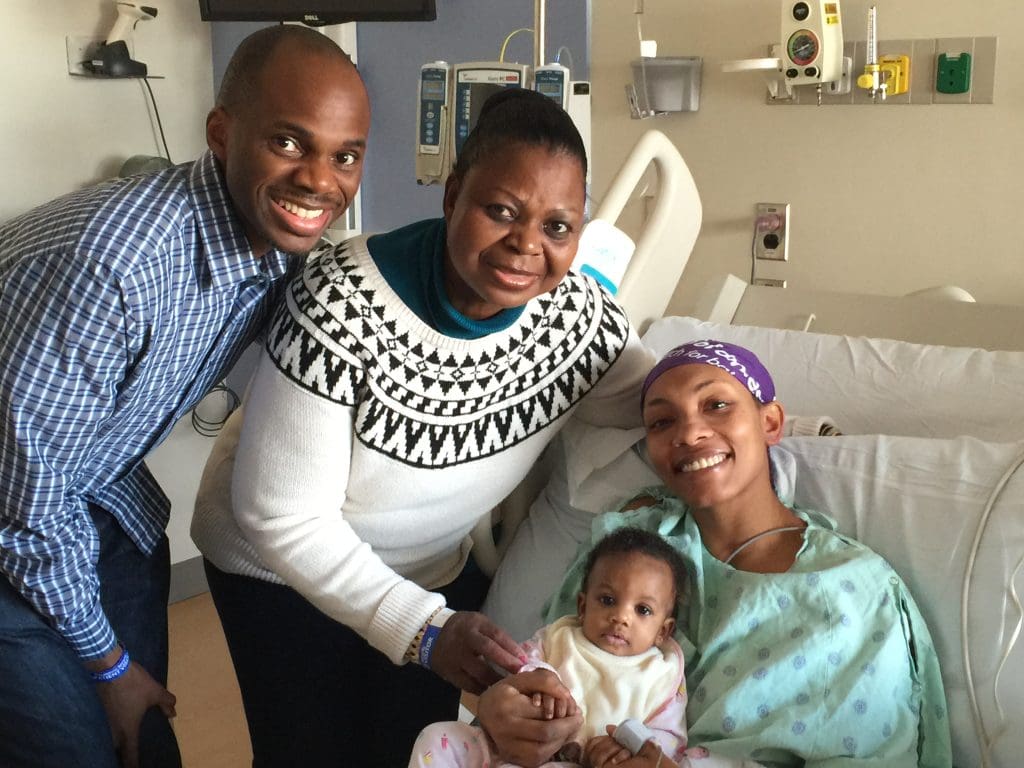







This story is a walkthrough of my pregnancy planning and cancer diagnosis after I’d given birth to my first child.
Preparing for Pregnancy
In January 2014, I started registering for local 5k races after joining a national women’s running group 2 years prior. I also purchased a gym membership and routinely worked out 2-3 times per week. I felt great when participating in the races and working out. I made changes to my diet, drank more water, and felt a strong sense of being in control of my health. These were my first steps in planning for a healthy pregnancy. I’d been married for almost three years and we decided it was time.
Then, in May, I felt a smooth lump developing inside the back of my left leg. I believed it was a change in definition in my hamstring muscle since I was using the weightlifting equipment at the gym. The next month, I shared this news about the lump with my primary care provider (PCP) during my annual physical.
Small Signs of Cancer
My PCP ordered an MRI. She assured me that everything was normal according to the report. The lump didn’t go away, but it didn’t hurt, burn, itch, feel inflamed, or impede my running or workouts, so I didn’t worry.
By late August, we learned that I was pregnant! However, the next month, I experienced a miscarriage. It was heartbreaking news. At year’s end, I was pregnant for a second time. We waited anxiously until the sonogram confirmed the baby’s heartbeat. Then, we shared the good news with our closest family members.
Large Signs of Cancer
By mid-summer 2015, the lump in my left leg was heavier and I couldn’t bend it backwards during prenatal exercise. Yet, my urine samples, blood tests, and assessments of the baby were all clear. As my due date approached, I was unable to set my left foot on the floor when I sat down. My husband became more vocal after I gave birth because during labor, he noticed the lump had grown far larger in a short period of time.
Report to Biopsy to Treatment
After my daughter’s birth, my aunt, an obstetric triage nurse, encouraged me to return to my PCP’s office and seek care about the lump, including having a biopsy. I must say that I’ve never seen facial expressions like the ones we saw from the health care providers that day. They made an appointment with an orthopedic oncologist in Baltimore, MD (about an hour away) within 2 days.
Upon meeting the oncologist, she said that for my age and health status, this was not normal. The joy of having an almost 4-week old baby was dim that day.
Now, things began moving fast. I was diagnosed with a rare soft-tissue tumor. The multiple reports revealed how much the lump had grown since 2014 when I first recognized it. The orthopedic oncologist developed my care plan and I met the radiation oncologist and his staff at a DC hospital two days after my diagnosis. We set up a treatment plan that began almost immediately, it included five weeks of daily radiation (excluding weekends). A couple of weeks into the radiation treatment, he notified me that surgery would follow.
I recall feeling conflicting emotions and being overwhelmed with planning and coordinating my baby’s care as my husband continued working. I felt hopeful when the radiation oncologist told me this type of cancer wouldn’t affect my baby. It wasn’t hereditary, wouldn’t prevent me from having more children, and that the goal of my care was ‘curable treatment.’
Physical Therapy to 5-Year Anniversary
My maternity leave morphed into long-term disability. Our family, friends, and co-workers were extraordinary supporters and phenomenal in caring for my daughter. I was able to return to work after 6 months.
I went from not being able to lift my left leg backwards, to sitting criss cross applesauce (as toddlers say) after physical therapy. The orthopedic oncologist strongly recommended that we wait two years before attempting to have a second child. She explained that this timeframe is when cancer recurrence is highest after the initial diagnosis. So, we waited patiently. My fear of being unable to have more children decreased with each MRI and CT scan that came back negative for cancer cells. Finally, we welcomed a second baby girl in October 2018. There were no health issues during my second pregnancy.
Over time, my incision healed. The scarring on my left leg is sensitive to touch, and the muscle occasionally cramps up, but the lump has not returned. My family and I were beyond thankful when I gave birth to a third daughter in August 2020.
We celebrated my five-year cancer-free anniversary in January 2021.
A key piece of advice that I now share with expectant and new moms is to not minimize, deny, or set aside any internal or external physical or emotional feeling that you experience.
Cancer and the New Mom: Lessons Learned
- Don’t be afraid to reach out for help
- Ask family and friends or hire a babysitter to care for your children so that you can pay attention to your health
- When driving to treatments, pump milk in the car using a hands free pump and store it in your breastmilk cooler bag
- Seek out cancer support resources and groups for young adults
- Advocate for yourself: Take notes, keep a list of your questions, and get answers about your treatment and costs
- Respond to health care provider and facility surveys; your words have power. Give honest feedback when the service is amazing or when you experience disrespectful care
- Pay it forward. Your survivor experience positions you to offer helpful guidance to other pregnant or postpartum moms who may receive a cancer diagnosis; share your story when asked to do so
- Remember your health: A diagnosis of one type of cancer doesn’t prevent another. Breast cancer is the second leading cause of cancer death in U.S. women; continue with monthly self-breast exams
Learn more about cancer screening and lifestyle changes you can make to reduce experiencing the types of cancer that affect women the most.