
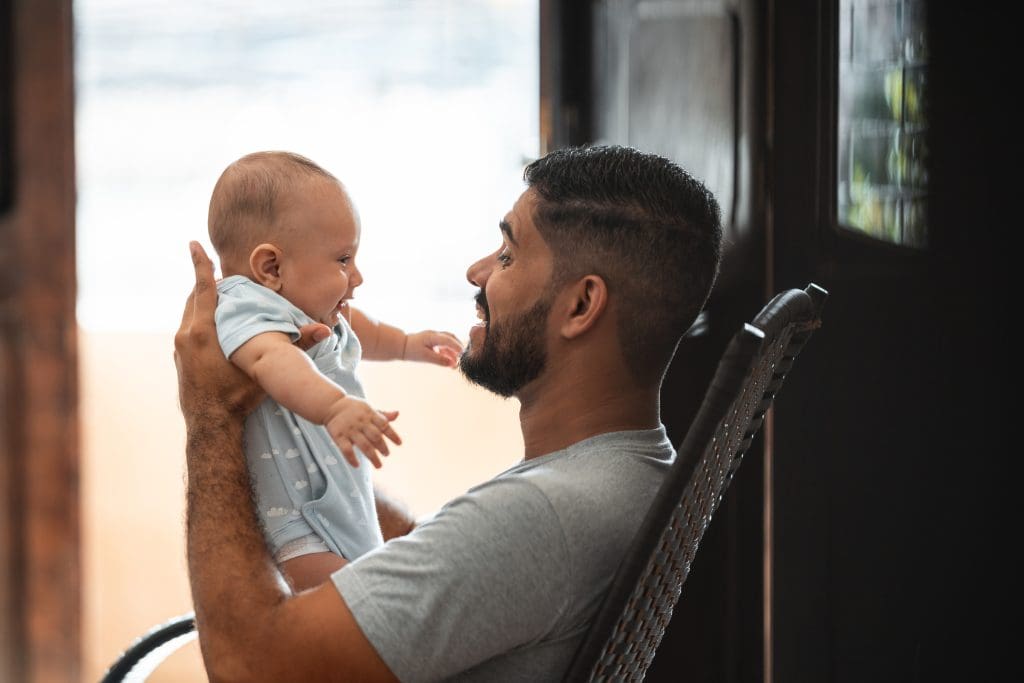







Your baby begins to talk to you long before they can speak words. The next time you’re diapering your baby in the quiet alert state, pay attention to their cues.
You may see baby’s eyes widen as they look at colorful objects on a family member, like when their eyes catch hold of auntie’s red earrings. They may keep following that earring with their eyes as she tilts her head. Baby’s definitely saying, “I’m interested in what I’m seeing. I want to know more about that bright red object.”
Other baby cues are more subtle, such as the following:
“You’re doing the right thing. I’m happy.” Your baby shows you he is satisfied by cooing or smiling.
“I’ve had enough attention for now. I think I need a break!” They will let you know when he’s had enough play or stimulation by looking away but not taking an interest in something else. He’s telling you he’s done for now.
“Let me out of here! Enough already.” They’re ready to escape their current situation when they twist their body, turn away from whomever is holding them and arches their back. Remember, we adults can turn and walk away; our babies have to use their bodies and movements to try and increase the distance between themselves and what they’re trying to escape. These moves often follow after the looking-away signal described above doesn’t work.
“I need comforting.” Just like you, your baby may need comforting in a variety of situations. He may be frightened, sad or confused in an unfamiliar situation. During these times, you may notice him trying to suck on something, like their fingers, hands or thumbs.
“I’m trying to comfort myself!” Crying babies will try to comfort themselves. You can help by speaking softly, and if that doesn’t work, try picking him up and carrying him around.
Watch your baby at different times during the day to see their range of communication signals – their cues and attention-getting behaviors. They has a unique personality and he’ll use it to show you what he wants.
You may find they cry at the first pang of hunger or that they waits until he’s starving to let you know they want to be fed. Your baby may even wait quietly for you to feed him. Do they lay still during diaper changes or are they wiggly? Just like grown-ups, you’re going to see your baby be active, passive, calm and irritable over time.
Get to know and understand your baby’s personality and temperament. Whether they prefer rocking or stillness, new people or being alone. If you watch, you’ll notice they’re constantly communicating their likes and dislikes to you. Tune in and respond so that your baby hears you talking right back at them.
Deciphering Baby Talk: What is Your Baby Saying is just one of many articles in our Baby’s Milestones section.
Also worth a read are: