






The American Academy of Pediatrics (AAP) recommends that breastfed babies receive vitamin D supplements (infant formula is already supplemented) to decrease the chance of rickets (softening of the bones). You’ll discuss vitamin Dwith your baby’s pediatric care provider at their first well-baby visit.
During your first trimester, your pregnancy care provider may perform a blood test known as serum 25-hydroxyvitamin D if they’re concerned that you have too little vitamin D. This test could also be done in the second trimester. Generally, the AAP recommends that all pregnant women take a daily vitamin D supplement.
What is Vitamin D?
Vitamin D (you may see it as D3 in supplements) is a fat-soluble vitamin and hormone that helps your body absorb calcium. Your body makes vitamin D from sunshine and absorbs it from foods or supplements.
Vitamin D deficiencies in pregnancy have been linked to increased risks for gestational diabetes, preeclampsia andvaginal infections as well as a greater chance of needing a cesarean birth. For babies, vitamin D deficiencies have been linked to the increased likelihood of cavities, more asthma and respiratory infections, softening of the skull in infancy and decreased bone health by age 9.
Where to Find Vitamin D
It’s hard to determine how much vitamin D your body naturally converts from sunlight. Ultraviolet B radiation (UVB) rays are strongest during midday hours and the summer months. You may receive less UVB radiation if you live further from the equator, if you experience more cloudy days throughout the year or if you have more air pollution in your area. Also, UVB rays don’t penetrate darker skin as well as lighter tones because it has more of the pigment melanin. Skin color and spending less time in the sun as you age both affect vitamin D production.
However, most experts don’t advise direct sun exposure without sun protection factor (SPF 30) sunscreen because of skin cancer risks.
Additionally, how much vitamin D you receive from food and supplements can be affected by your body fat percentage, and different supplements and prenatal vitamins vary in dose, purity and absorption.
Vitamin D Sources
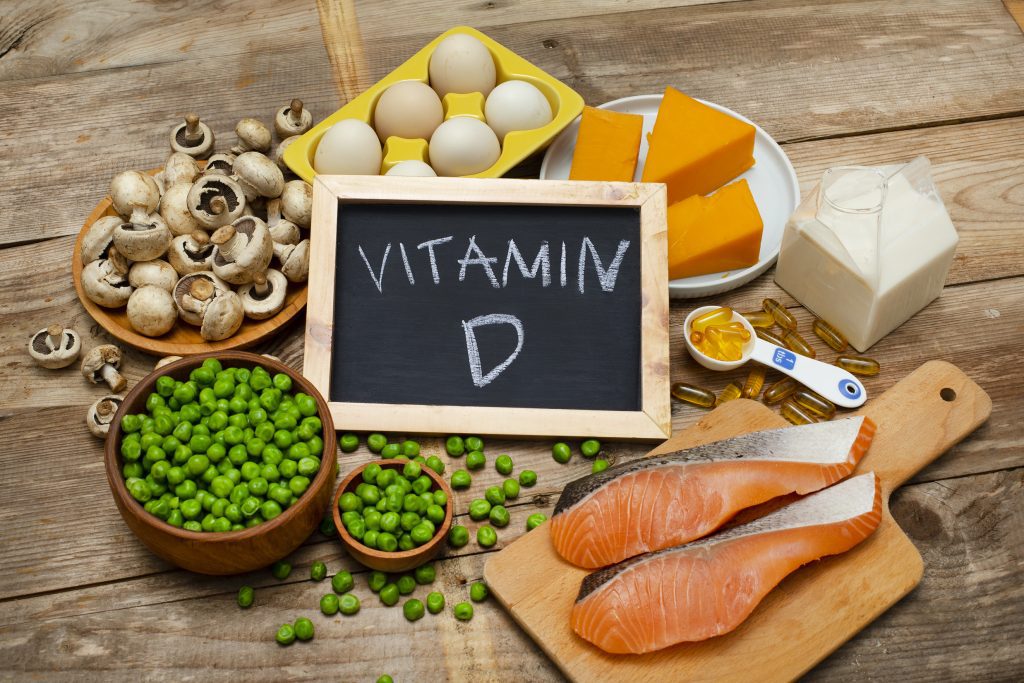
One serving of each of these includes 100 IU of vitamin D:
- Cod liver oil
- Cold water fishes, including trout and sardines (but limit fish consumption in pregnancy to 2-3 servings per week)
- 1 cup of fortified orange juice, milk or yogurt
- 2 ½ large eggs
Other foods that are good sources of Vitamin D include breakfast cereals, mushrooms, fortified American cheese, soy milk and tofu. During pregnancy, limit fish consumption to 2–3 servings per week, and have soy milk and tofu in moderation.
Getting Enough Vitamin D
The recommended daily amount of vitamin D during pregnancy is 600 IU/day. Most prenatal vitamins have 400 IU, so you’ll need to get extra elsewhere. Too much vitamin D can also be a problem—experts have set safe upper daily limits of anywhere from 2,000–4,000 IU during pregnancy. Talk with your pregnancy care provider about foods you’re considering and whether you need to take a vitamin D supplement.
YOU MAY ALSO LIKE: Use Prebiotics & Probiotics to Promote Your Health