
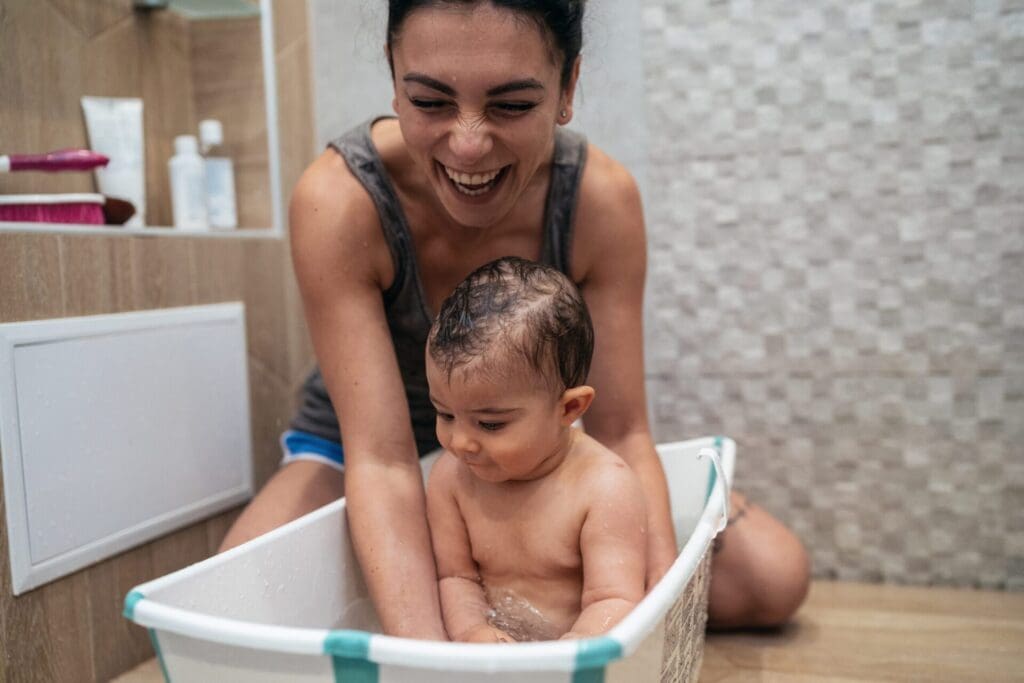







Bathtime is a delightful bonding experience for parents and their little ones. Ensure your baby’s safety with steps that prevent slips, falls, and avoids accidental drowning. Follow these tips to keep bath time fun and safe for you and your precious bundle of joy.
Never Leave Your Child Unattended
Never leave your baby unattended in the water, not even for ‘just a moment.’ Babies can drown in seconds in just a few inches of water, so always stay within arm’s reach. If your phone or the doorbell rings, or you need to check on something urgently (like turning off the stove), scoop your wet, soapy baby into a towel and take them with you.
Prepare the Bath Area
Keep baby’s bathing area uncluttered, clean, and free of any hazards. Remove sharp or electronic objects that could accidentally fall into the tub. Adjust the room’s vents to avoid air flowing directly on baby. Protect your knees and back by kneeling on a pad or rolled up towels if you’re bending over a tub.
Use a Baby Bathtub or Bath Seat
Use a baby bathtub or a bath seat designed for infants as they have built in support to ensure baby doesn’t slip or slide around in the water. Never place your baby in a bathtub on an elevated surface; the tub should be on a flat stable floor in a bath or shower, or on the bathroom floor. Choose a tub that has a non-slip bottom to prevent accidents.
Keep Bath Products Within Reach
Gather all the bath products before starting; keep baby’s soap, shampoo, towel, and other essentials within arm’s reach.
Maintain Proper Water Temperature and Level
Experts recommend baby’s bath water be warm but not too hot, or between 98.6 degrees and 100.4 degrees. Check that the thermostat on your home’s water heater is set at or less than 120 degrees (49 C) to prevent burns or scalding. Fill the bathtub with just enough warm water to cover your baby’s legs. Avoid overfilling to reduce the risk of accidental drowning. Always test the water temperature with a baby thermometer; your wrist or elbow is not reliable. According to the American Academy of Pediatrics, a quick submersion bath is fine before the cord falls off, but make sure to dry the stump afterward.
Choose Bathing Products Designed for Babies
Choose bath products that are made specifically for babies. Their skin is delicate and needs special care when cleaning. Look for natural and hypoallergenic products to minimize the risk of skin irritation or allergic reactions.
Steady and Supportive Handling
Newborns can be slippery! Many parents find that swaddling baby in a towel in their bathtub helps keep baby warm. Simply pull the towel away from the area you’re cleansing and replace it as you move on to another part of baby’s body to help baby stay warm throughout the bath.
Always hold your baby in the water with a firm and steady grip. Use one hand to support their head and keep the other hand free to wash and interact with your baby. Change positions when washing baby’s hair to avoid water flowing into their eyes.
Bathtime is a wonderful opportunity for bonding and relaxation, so it’s essential to prioritize your baby’s safety so that you can enjoy this special time. Follow these tips to secure your baby’s environment. Use your best judgment and talk with your baby’s pediatric care provider for advice on keeping baby safe during bath time.
YOU MAY ALSO LIKE: How To Bathe Your Premature Baby