
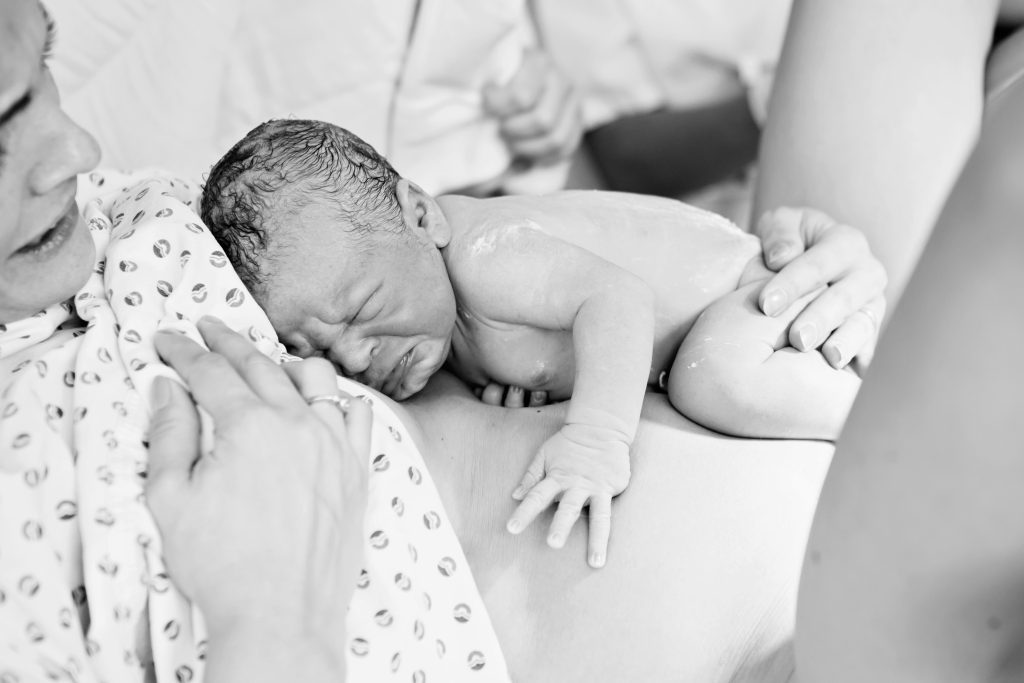







Going skin-to-skin with your baby immediately after birth, even before baby has stabilized, can reduce their risk of dying by 25%–especially if baby is born with a very low birth weight, say researchers writing in the New England Journal of Medicine.
Continuous skin-to-skin contact between newborn and mom, or “Kangaroo Mother Care” (KMC), is an effective way to reduce infant mortality globally. The World Health Organization had recommended babies go skin-to-skin after they’re stabilized—but the results of show that even if baby isn’t stable, skin-to-skin is the best place for even very low birth weight babies.
“Giving skin-to-skin contact immediately after delivery to very small, unstable babies has encountered quite strong resistance, but 75% of deaths occur before the infant has been judged sufficiently stable,” says Nils Bergman, doctor and researcher at the Department of Women’s and Children’s Health, Karolinska Institutet, in Sweden. The study was conducted at five university hospitals in Ghana, India, Malawi, Nigeria and Tanzania, where mortality for these babies, prior to the study, varied between 20%-30%.
The main message is that low weight newborns should receive skin-to-skin contact immediately after birth and subsequently at a mother-infant couplet care unit, where mothers and babies are looked after together without having to be separated,” researches concluded.
For their study, participating hospitals were trained in safe skin-to-skin contact for unstable infants. During the first 72 hours, infants in the skin-to-skin group received 17 hours of skin-to-skin contact per day, compared with 1.5 hours in the control group. Mortality during the first 28 days was 12% for those who went skin-to-skin to stabilize compared to 15.7% in the control group, which corresponds to a death reduction of 25%. Researchers also observed fewer babies with low body temperatures with continuous skin-to-skin care.
“Keeping the mother and baby together right from birth, with zero separation, will revolutionize the way neonatal intensive care is practiced for babies born early or small,” says Dr Rajiv Bahl, Head of Maternal and Newborn Health Research and Development at the World Health Organization, (WHO). Bahl added, “this study illustrates that kangaroo mother care has the potential to save many more lives if it is started immediately after birth . . . for infants in countries of all income levels.”
WHO is in the process of reviewing its current recommendations on kangaroo mother care, published in 2015, in light of this new evidence.
YOU MAY ALSO LIKE: Baby’s First Breath