






You might have heard that the it’s best for you and your baby to snuggle skin-to-skin right after baby’s birth. But you may be wondering why? And how?
Practicing Skin-to-Skin Care with Your Newborn
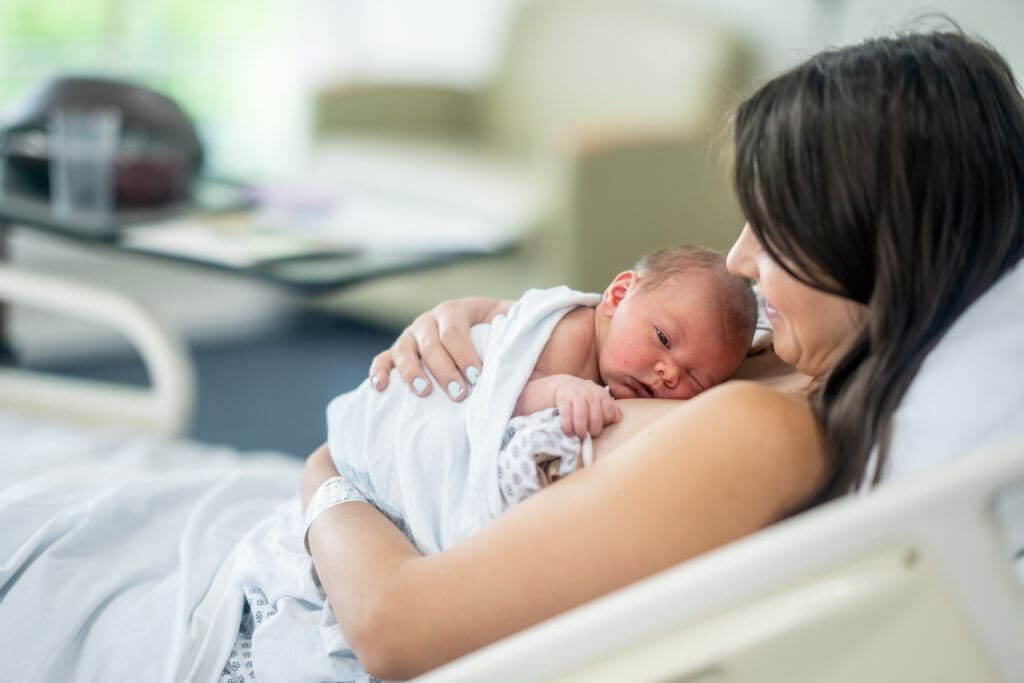
Skin-to-skin care means placing your naked newborn directly onto your bare chest and then draping warm blankets over you both. Skin-to-skin is exactly like it sounds: No clothing or blankets, should be between you and your baby’s diaper and hat.
You and your baby should remain undisturbed to rest. When given enough time and patience, your hungry baby will begin rooting around for a meal — navigating birth is a lot of work for baby! Gently turn baby’s face toward your breast so you can clearly see baby’s face and help them begin nursing.
Feasting Following Birth
Ideally, skin-to-skin will happen immediately after birth for healthy term or near-term babies. There’s no need to wait for the umbilical cord to be removed; babies can be placed skin-to-skin immediately after birth with the cord still attached.
Nestled on your bare chest, baby’s healthcare providers can assess your baby’s wellbeing, take vital signs, and provide any needed care or support, all while skin-to-skin with you.
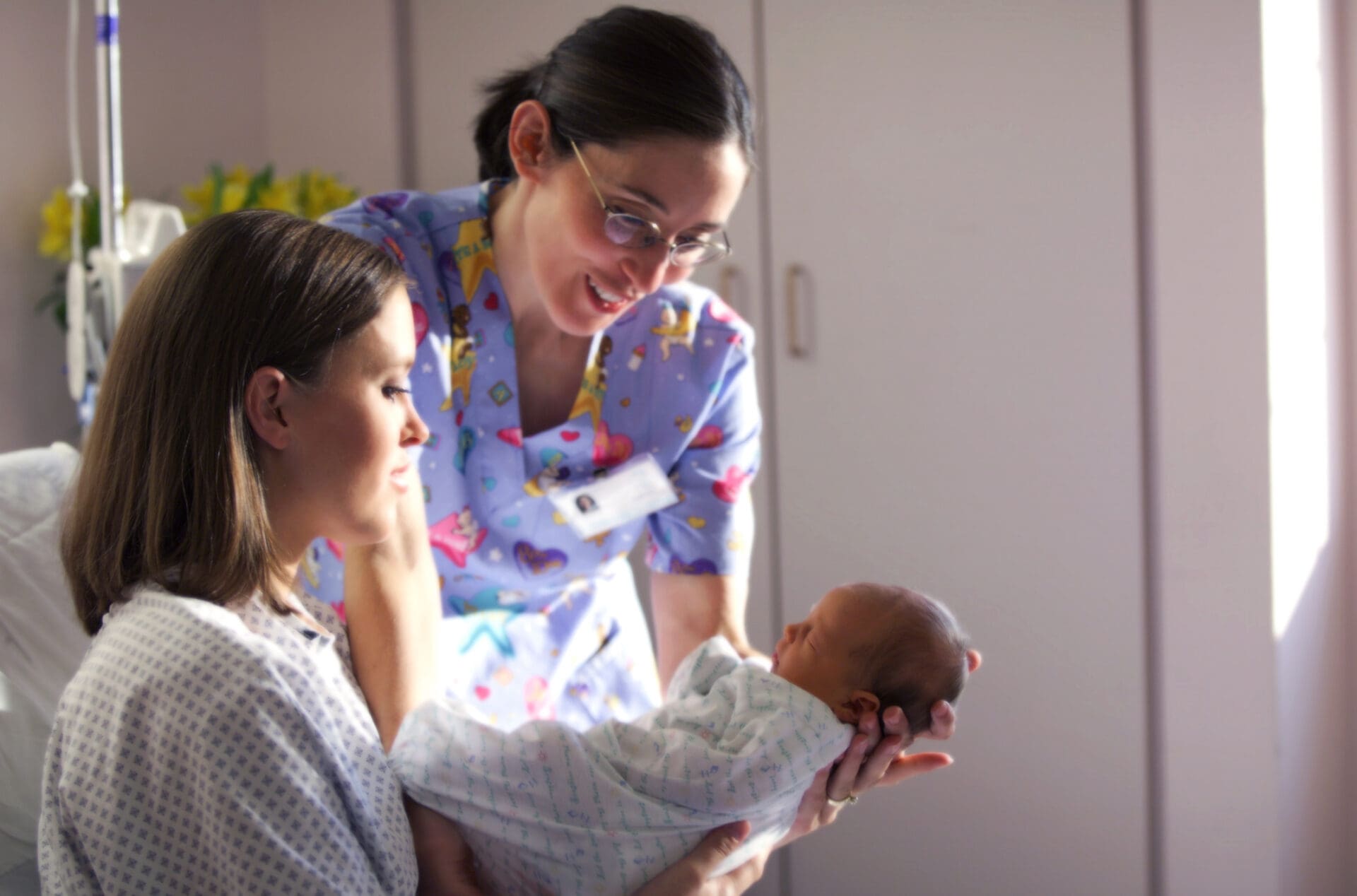
Let your nurses know if you would rather baby receive care apart from immediately going skin-to-skin as it’s a common practice in many hospitals and birthing centers. Perhaps you want baby to be assessed first and have any amniotic fluid or blood gently wiped away. Luckily, skin-to-skin isn’t just for immediately at birth, it’s beneficial to you both as soon as you begin.
What about Cesarean birth?
If you’re having a cesarean birth, request to go skin-to-skin with baby at birth in the operating room. With spinal anesthesia (the most common for cesarean birth) you’ll be awake and able to gently allow your baby to nestle against your bare skin, perhaps with help from your partner or a nurse.
However, if you receive general anesthesia, which will likely involve you feeling drowsy or sleepy, you can begin skin-to-skin care once you’re through recovery and awake enough to care for your newborn.
Skin-to-Skin Care isn’t just for Moms!
Especially with cesarean birth, dad or a family member can play an important role in helping baby stabilize their breathing, body temperature, and blood sugar by going skin-to-skin with baby in the surgical suite, while mom is receiving post-surgical recovery care.
Dads, brothers or sisters, aunts or uncles, dear friends, and other loved ones can practice skin-to-skin too! Your baby will learn the smells and heartbeats of their new family through this incredibly healthy activity for baby.
Benefits of Skin-to-Skin for Mom
- Oxytocin surge leads to less bleeding and good milk production.
- Breastfeeding is more successful.
- Less postpartum depression symptoms.
What are the Benefits of Skin-to-Skin Care for Baby?
- Bonding with parents and loved ones!
- Baby stays warm, and their blood sugar remains steady.
- Baby’s vital signs (oxygen, heart rate, temperature) remain within normal limits.
- Baby is calm, has less stress, and cries less.
- Starting breastfeeding is typically more successful as baby emerges hungry!
- Baby has less weight loss in those first hours and days.
- Baby experiences less pain during any needed procedures (vaccines, injections, lab draws).
- Premature babies have faster brain development.
What are the Benefits of Skin-to-Skin Care for ALL Parents and Caregivers?
- Bonding with baby!
- Boosts feelings of well-being.
- Baby learns their needs will be met by their parents and family as well as others.
- Moms may feel increased self-confidence and self-esteem in caring for baby.
- Less stress for both mom and baby.
What if My Baby has Medical Complications?
Sometimes babies need a little—or a lot of help transitioning to life in the outside world following birth. If your baby needs extra help after birth, you may be asked to delay going skin-to-skin with baby until baby’s healthcare providers are confident that baby is well.
The good news is that you can practice skin-to-skin care as soon as your baby is stable. If your baby is born early or admitted to the Neonatal Intensive Care Unit (NICU), the nurses in the NICU will help you practice skin-to-skin care, also called kangaroo care, once baby is stable. Your baby’s healthcare providers will assist you.
In the NICU, you may find its best to wear loose layers that open in the front so that you can easily bring baby to your bare chest for nursing and cover them with your clothing or a light blanket. The nurses in the NICU will be your champions in helping you learn to care and feed your baby until they can leave the hospital for home.
Because skin-to-skin care immediately after birth is so beneficial for families, it’s standard practice at many hospitals, yet not all. As you tour birthing facilities, ask if the nurses will support your desire to immediately go skin-to-skin with your baby after their birth.