







Wouldn’t life be easier if your newborn came with a manual? Surely, the adjustment to parenthood would be smoother if you knew exactly how to feed, care for, transport, and play with your baby from infancy to toddlerhood. Even though every baby has their own temperament and personality that affects their feeding, sleeping, and playing, basic guidelines for safety apply to all children. According to the Centers for Disease Control and Prevention (CDC), unintentional injuries are the fourth leading cause of infant death. Anyone who’ll be caring for your baby must know the basics of how to keep them safe.
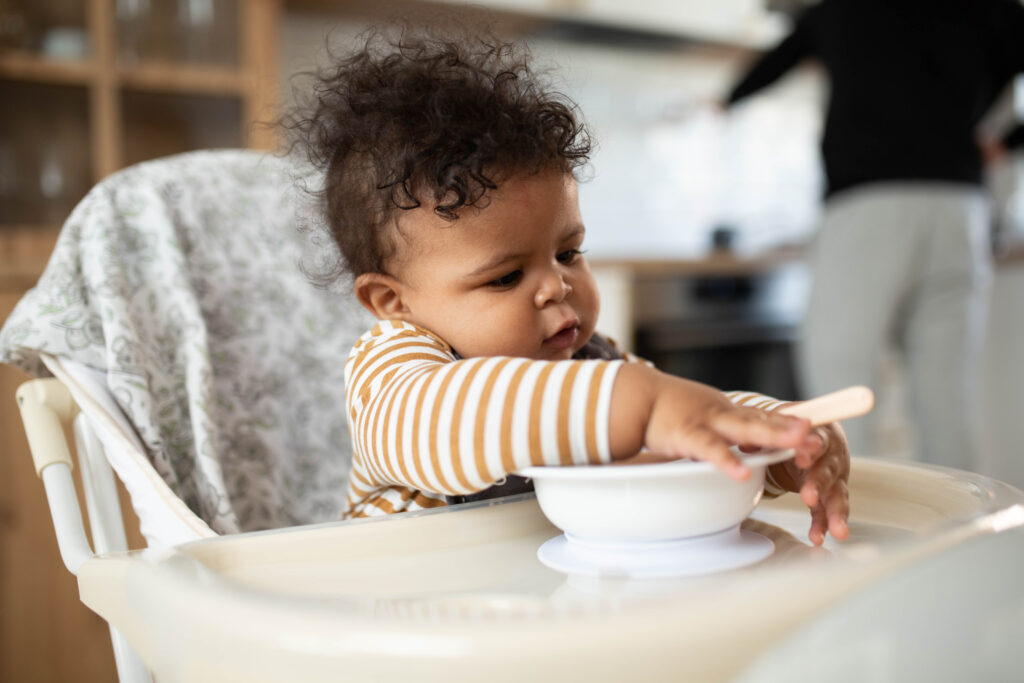
Food Safety: Baby at the Table
The American Academy of Pediatrics recommends exclusive breastfeeding for the first 6 months of life; iron-fortified infant formula is a safe alternative if breast milk isn’t an option. Talk with your pediatric care provider at each visit to ensure your baby is getting all the nutrients they need and is gaining weight appropriately.
Here are ways you can keep your baby safe and healthy as they grow from drinking milk to eating solid foods:
- Always wash your hands before and after managing milk and baby’s bottles.
- Store milk at the correct temperature in the refrigerator or freezer. Use the CDC’s website for the most up-to-date
- guidelines.
- Use the proper amounts of water and formula listed on the label.
- Avoid honey for the first year of life—some of the bacteria in honey can be deadly to infants.
- Offer allergens like peanuts and eggs slowly: Try one food at a time, starting around 6 months of age, and be sure
- to monitor your baby closely afterwards.
- Stay away from choking hazards, like whole grapes, popcorn, or hot dogs.
- Skip ultra-processed foods with added sugar and salt, like cereals, pouches, and yogurts.
- Take an infant CPR class.
Sleep Safety: Baby in the Crib
There’s a lot of misinformation about safe sleep within families and on social media. The American Academy of Pediatrics recommends the ABCs of safe sleep to guide how to put your baby to sleep for every nap and every night.
- Your baby should be alone. Baby should sleep in the same room with you, but alone in their own bassinet or pack-and-play. It’s dangerous to sleep next to your baby in the same bed. Also, avoid naps with baby on the couch or in your favorite chair.
- Put your baby on their back. Unless specifically told otherwise by your baby’s pediatric care provider, baby should be placed on their back to sleep to reduce their risk of sudden infant death syndrome (SIDS).
- Use a crib. Your baby is safest when they’re on their own sleep surface. Also, keep stuffed animals, blankets, pets, and any other suffocation hazards out of their sleep area.
Home Safety: Baby Around the House
Every object in your home seems reasonable until a new baby arrives on the scene. You’ll develop a new watchful eye when ensuring that baby is safe in different rooms of your home.
- Keep the floors clean. Watch out for small objects around the house.
- Use anti-tip straps for furniture and TVs.
- Place choking hazards and other dangerous objects, like cleaning supplies and tools, out of reach (or in cabinets
- and drawers with baby safety locks on them).
- Use safety gates to cordon off dangerous areas, such as the kitchen or staircases.
- Don’t allow baby to reach inside your purse, handbag, or those of visitors.
Cuddle Safety: Baby With the Family
Seeing your family, friends, and loved ones hold your new baby just warms your heart! It’s wonderful to see the bonding in real time as everyone soaks up some baby snuggles. Set some boundaries, so everyone follows safety rules to keep the cuddles flowing!
- Always wash hands before holding baby.
- Don’t kiss baby on the mouth—and be firm if you don’t want others kissing your baby at all.
- Never smoke tobacco, use electronic cigarettes, or smoke any other type of substance around baby or before being around them—second-hand smoke can hurt baby’s lungs.
- Avoid visiting the baby when sick. Their immune system is still developing, so family and friends should wait until they feel better to sit near or hold baby.

Health Safety: Baby at the Clinic
Baby’s pediatric care provider will be your partner for the next 18–21 years. They’ll help guide you through the joys and challenges of raising your baby from the newborn phase until they leave the nest! Below are some good principles to follow for health care visits:
- Stay up to date on baby’s vaccine schedule. Keep a record of all vaccine types and the dates when they were given.
- Attend all well-child visits. Well-child appointments are a great opportunity to ensure baby is on track with developmental milestones.
- Prepare a list of questions in advance of well-child visits. Save them in your phone or send them through the patient portal to ask about your concerns. Some providers may even allow you to text questions in between visits.
- Take detailed notes at home to further review your child’s sleep, wake, toileting, and play habits.
Travel Safety: Baby on the Move
Are you taking your baby on planes, trains, and automobiles? Traveling with your baby can be a great way to make new family memories and see the world together. Here are some tips for a fun and safe trip: Bon voyage!
- Inform your pediatric care provider about travel with your baby.
- Ensure the car seat is correctly installed in any vehicle you’ll use.
- Plan frequent stops when travelling by car for feedings, changing diapers, grabbing snacks, and stretching.
- Pack breast milk or prepared formula for easy access if you’re bottle feeding on a flight. TSA may need to screen your milk before you can clear the security area.
- Bring extra diapers and wipes in an easy-to-reach pocket. It’s always better to have a few too many than not enough!
- Contact the hotel in advance to ensure they have a crib that can be brought into your room for baby. You can also rent pack-and-plays, highchairs, car seats and more from online baby vendors local to the area.
Don’t get overwhelmed with this long list of safety tips. Prioritize and focus on one area at a time. Talk to other moms, your partner, or online support groups about the help you need. The key to keeping baby safe is planning.