






One of the most important checklist items you’ll have while pregnant is purchasing your baby’s car seat. You’ll likely spend a couple of hours reviewing the safety features of different car seats to decide which one is best suited for your family, fits your vehicle, and ultimately appears on your registry. Your little one will grow quickly right before your eyes, and at some point, you’ll need to transition baby within the same car seat or to a new one that best fits their size.
New federal car seat safety standards are on the way, so let’s review the nuts and bolts of current safety features and then plug in those new details.
Choose the Right Car Seat
Read Your Owner’s Manual: Locate and read your vehicle owner’s manual that details how you can secure baby’s car seat using either anchors and a tether or a seat belt. Together, the Lower Anchors and Tethers for Children are known as the LATCH system. Using the LATCH system can minimize your dependence on your vehicle’s seat belts for car seat installation.
Install Properly: Before giving birth, ensure that you’ve installed the seat correctly. Visit a car seat inspection station in your area to confirm your setup is solid or to receive guidance on how to properly install the seat. Secure your infant in their car seat every time they ride in a vehicle.
Sign up for Recalls: Register baby’s car seat with the manufacturer upon purchase to receive any recall notices or safety updates. Sometimes, these updates occur years after you’ve purchased the seat.
Watch Baby Grow: As your baby grows, review the car seat manual for any adjustments that need to be made based on their height, weight, and age (this applies for each vehicle you own or use). There are four types of safety restraint systems to consider:
- Rear-facing
- Forward-facing
- Booster seat
- Seat belt
Check regularly to see if baby’s car seat has cracks, loose parts, damaged straps or fasteners, or any other visible wear. Decide if you need a new car seat to keep your baby safe.
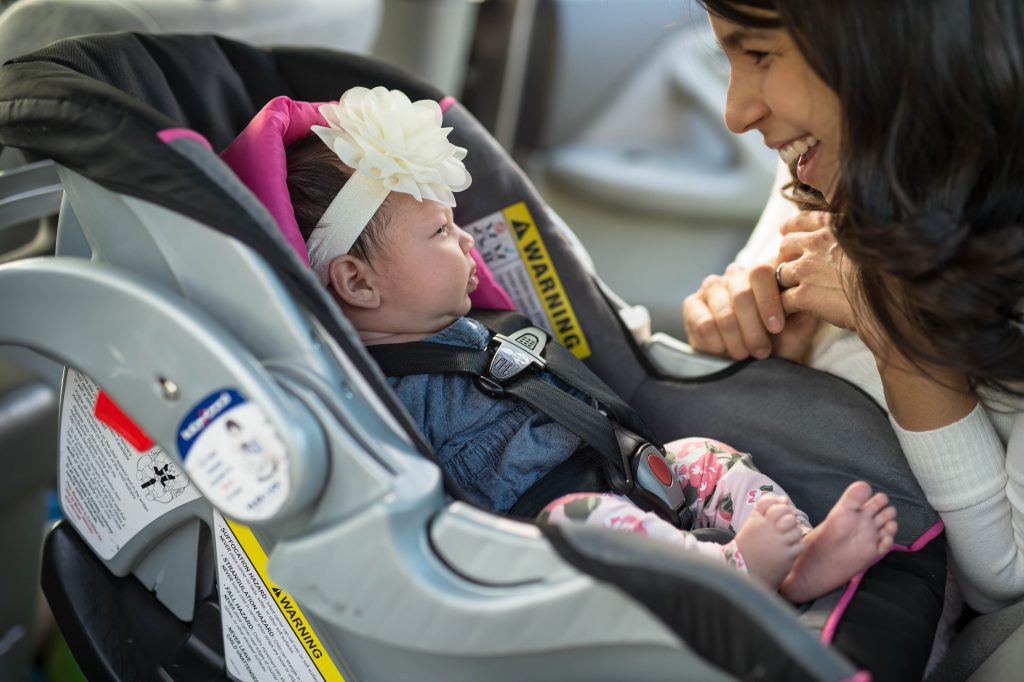
Look for Labeling: Read the car seat label to ensure the following is included:
- Manufacturer’s name and contact information
- Car seat model number
- Date and location of manufacture
- Car seat expiration date
- Minimum and maximum weight and height requirements
- Labels on the car seat in English and Spanish
- Statement: “This child restraint system conforms to all applicable Federal Motor Vehicle Safety Standards (FMVSS)”
- Second statement: “For recall information, call the U.S. Government’s Vehicle Safety Hotline at 1-888-327-4236 (TTY: 1-800-424-9153), or go to http://www.NHTSA.gov”
Important Changes
In 2022, the National Highway Traffic Safety Administration (NHTSA) finalized new regulations for child restraint systems. The primary focus was on enhancing side-impact protection, of which there were no previous federal requirements. Manufacturers were given 3 years, until June 30, 2025, to implement the new standard, known as Federal Motor Vehicle Safety Standard No. 213 (FMVSS 213a). However, that date has now been extended to December 5, 2026, to allow time for smaller manufacturers to ensure their car seats meet the new standards.
Side Impact: A new sled test has been designed that simulates a 30-mile-per-hour side-impact crash involving two vehicles. Properly installed rear- and forward-facing car seats are examined to see how well they protect the head and chest areas of 12-month-old and 3-year-old test dummies during this type of T-bone collision.
In this type of crash, there’s less space between baby and the point of impact. The NHTSA notes a high number of deaths and injuries in these types of crashes for children under the age of 12. The focus had been on frontal crashes because those are the most frequent types of crashes and lead to the majority of injuries and deaths in car seats.
Lap and Shoulder Seatbelts: FMVSS 213a requires car seat testing with both LATCH and lap-shoulder belt installations.
Height and Weight Limits: The new standard applies to car seats for children weighing up to 40 pounds or up to 43.3 inches tall.
Many major manufacturers of car seats have been testing side-impact crashes for over a decade and may already meet the updated requirements. Therefore, many current seats are effective in reducing the risk of death or serious injury in a crash. Contact your car seat manufacturer to confirm.
Car Seat Expiration Dates
If you currently own a car seat, note that you don’t need to replace it as long as it hasn’t expired. You can check the expiration date of your baby’s installed safety seat: Look for a sticker on the side or a stamp imprinted on the plastic area of the bottom or back of the seat. The car seat manual will also show where to find the expiration date on the seat. You can look up the expiration date on the manufacturer’s website or call their toll-free number. Typically, a car seat expires within 6–10 years from the date it was manufactured.
Car seats expire for a number of reasons, such as wear and tear from frequent use of the materials, the expected lifespan set by the manufacturer, and improved safety standards based on new technology and data.
You should also consider your child’s safety seat expired if it was installed in a vehicle that experienced a moderate or severe crash. For example, if the airbags were deployed, the vehicle was towed, a passenger inside the vehicle was injured, the door closest to the car seat was damaged, or the safety seat was visibly damaged.
Car Seat Recycling
Once a car seat has expired, it is no longer safe to donate or pass down to a family member or friend. Search online for major retailers that host trade-in events and local organizations that accept vehicle safety seats for recycling.
According to the NHTSA, car crashes are a leading cause of death for children ages 1 to 13. In 2023, 43% of children killed in car crashes were unrestrained. Follow the NHTSA’s recommendations and safety tips as closely as possible and keep your child in the back seat at least through age 12 to reduce the risk of your child being injured in a car accident.
YOU MAY ALSO LIKE: Nurses Make Change Possible for Babies