







Very shortly after starting to receive prenatal care, you will probably have a blood test to determine your blood count. You may find out you have anemia, a medical condition in which you don’t have enough healthy red blood cells. During pregnancy, your blood volume increases by up to 50% to support your growing baby, and you’re more vulnerable to anemia if your diet doesn’t have enough iron, folate, or Vitamin B12.
What Causes Anemia?
The most common cause of anemia in pregnancy is dietary deficiencies. When your body doesn’t have the nutrients it needs to make healthy red blood cells, it won’t have enough hemoglobin (the substance inside red blood cells that helps them carry oxygen). This can affect your baby’s growth and make childbirth more dangerous for you. Other less common causes of anemia include heavy bleeding and the body’s own destruction of its red blood cells.
What are Symptoms of Anemia?
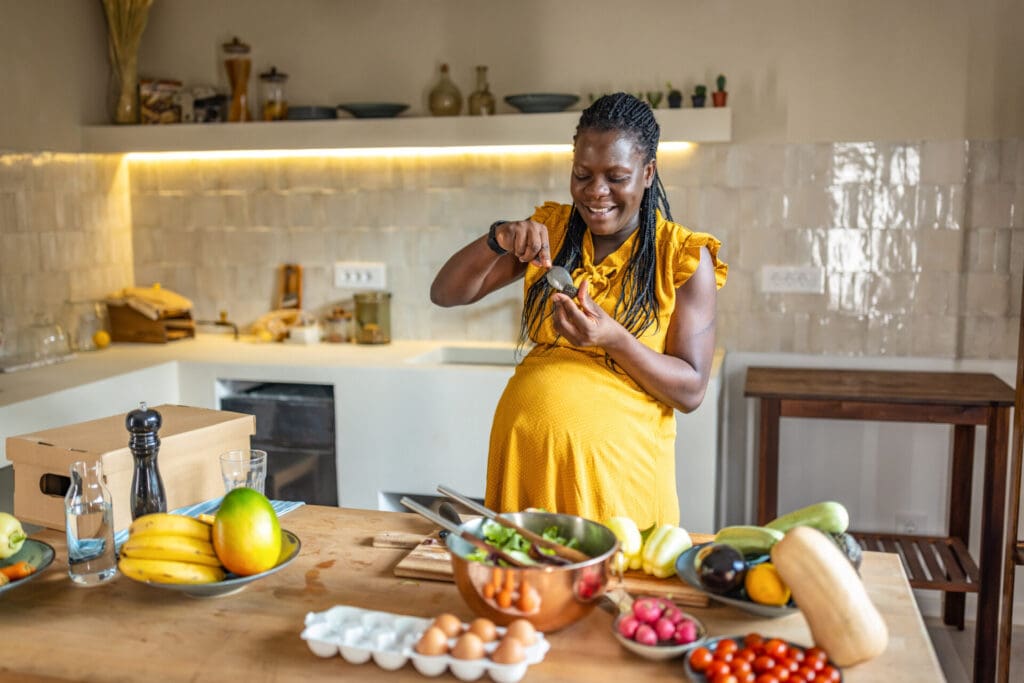
Some types of anemias can be prevented or cured with a healthy diet. If that’s the case for you, here are some ideas for how you pack more of the nutrients you need into your diet:
How do you Manage Anemia or Low Iron?
Some anemia can be prevented or cured with a healthy diet. If that’s thecase for you, here are some ideas of great foods you can pack into your diet:
- Iron: Increase of intake of meat, beans, lentils, and dark green leafy vegetables.
- Folate (folic acid): Go for fruits, dark green leafy vegetables, green peas, kidney beans, cheese, eggs, fish, almonds, and peanuts. You can also get folate from vitamin-enriched grain products, such as bread, cereal, pasta, and rice.
- Vitamin B12: Eat enough meat, milk, yogurt, cheese, eggs, and fortified cereals.
- Vitamin C: Consume citrus fruits, peppers, broccoli, tomatoes, melons, and strawberries. Foods with vitamin C help your body absorb iron.
If you find that you need a boost in addition to an iron-rich diet, discuss the following with your provider:
- Iron pills: These can be capsules and extended-release tablets. Your provider will specify how much to take each day.
- Liquid iron: If your provider has prescribed iron pills, and you find that constipation or nausea is a problem, discuss the possibility of taking iron in liquid form with over-the-counter products, such as Liquid Geritol or Floradix.
- Iron infusion: Iron delivered through an IV may replenish iron stores more quickly and efficiently than oral iron therapy.
- Erythropoietin therapy: Erythropoietin is a red-blood-cell-protecting hormone produced by the kidney. This therapy can increase your red blood cell mass without any ill effects for you or baby.
Pregnancy is an exciting journey, and you may encounter a few surprises along the way. The good news with anemia is that you have options, and you can take steps each day to actively improve your health and your baby’s.
YOU MAY ALSO LIKE: Healthy Summer Treats and Tips for Expectant and New Moms