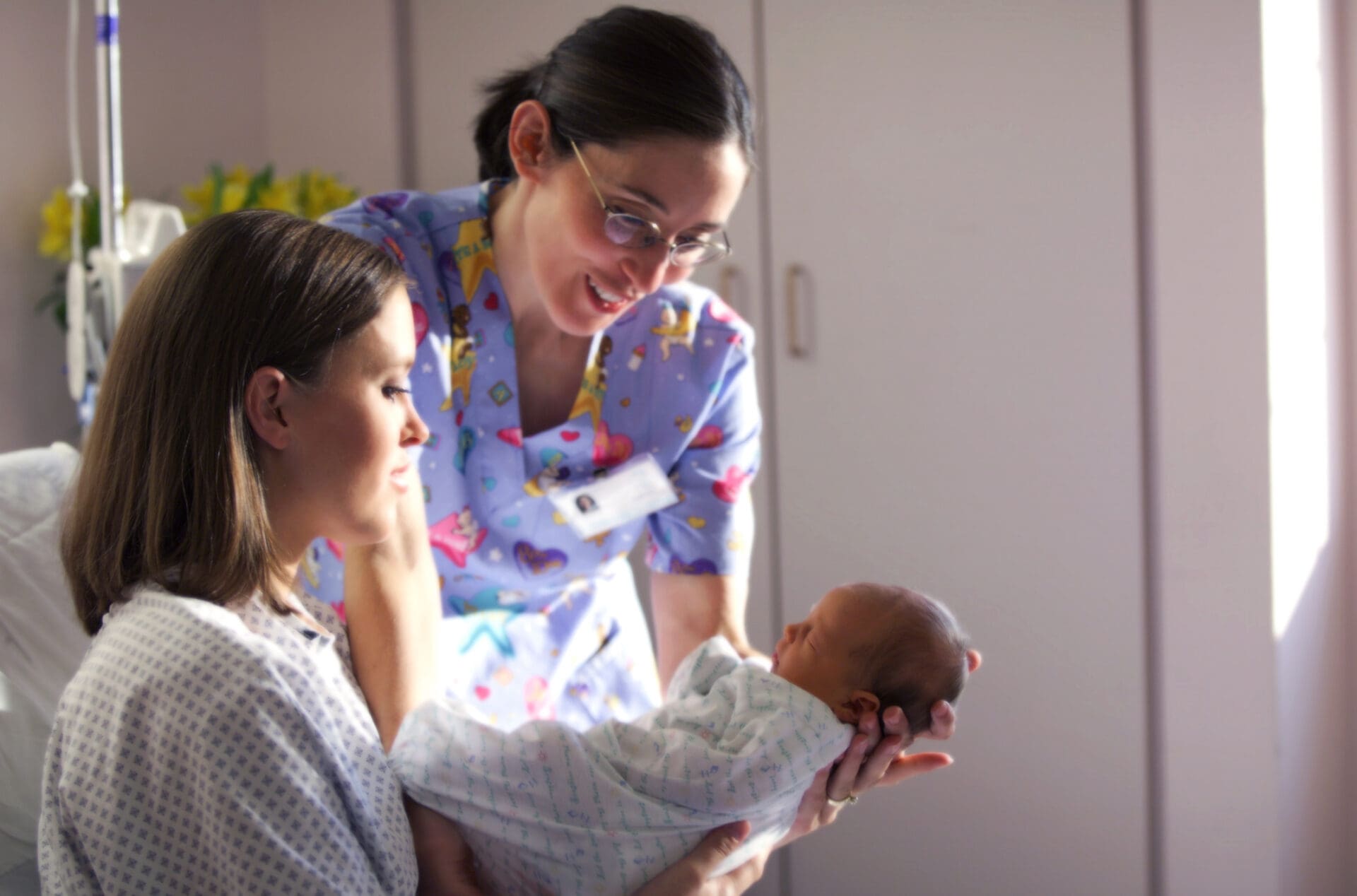








Immediately after birth, a few important things can keep baby safe and healthy.
Skin-to-Skin Care
Experts recommended that your baby is placed on your chest, skin-to-skin after they’re born if all is well. This practice soothes your baby and helps with breastfeeding and bonding. Holding baby skin-to-skin can also be a normal part of how you care for your baby beyond your hospital stay.
Rooming In
Most hospitals provide you the opportunity to room-in with your baby until you go home. Your baby will stay swaddled in their bassinet in the room with you instead of going to a nursery. Rooming-in helps baby to breastfeed as needed, benefitting both of you because your milk may come in sooner.
Risks to Baby
Expect to be tired, maybe even exhausted, after labor and birth. There are a few cautions about placing baby in bed with you, skin-to-skin. The risks include your baby accidentally falling out of the bed or suffocating because you’ve rolled on top of them. Know that your newborn isn’t able to move out of a dangerous position.
Steps To Keep Baby Safe in the Hospital
- Wear a safety wrap, so your baby stays securely in place on your chest
- Ask your partner to wake you if you begin to fall asleep while breastfeeding
- Set an alarm that can remind you to change baby’s position or switch breasts
- Keep your hands over baby to hold them against you
- Drape a blanket over baby’s back, and ensure you can see baby’s face while they’re nursing
- Once baby is full, place them on their back to sleep in their bassinet
Steps To Keep Baby Safe at Home
When you’re settling in at home, follow all of the above guidance and add the following:
- Avoid distractions—just focus on your baby
- Take turns with your partner or family member—after you breastfeed, they can hold baby
- Sit in a chair with supportive arms when holding baby
- Never leave baby alone on a couch or bed
- Place baby in their bassinet or crib if you need to leave the room
Ask for Extra Help
It’s okay to reach out for support from your nurses, partner, family and friends. Anyone who’s had a child before understands that you need extra help sometimes.
In the hospital, no one may fully know what you need. Take notes on your phone, use the hospital board on the wall in your room or have your partner call the nurse to let them know your requests.
Once you’re home, call your pregnancy care provider or baby’s pediatrician if you have concerns about you or baby’s health. Reach out to a lactation consultant if you need assistance with any breastfeeding issues. Create a system with your partner and any visitors in your home for what to do if you or baby experience a medical emergency.
Don’t be Afraid to Ask for Help Especially in these Situations
- You’ve had a cesarean birth—remember this is major surgery
- You’re taking narcotic pain or other medications that make you sleepy
- You have birth complications, such as postpartum hemorrhage or preeclampsia
- Your birth facility has a nursery and you’re comfortable having the staff take care of your baby for a while, so you can get some rest
- You don’t have anyone who can stay overnight with you at the hospital or when you first go home
- You’re exhausted or feel overwhelmed by having undergone a powerful and life changing event—giving birth
Your health and needs are important—you don’t take anything away from bonding with your baby by caring for yourself.
YOU MAY ALSO LIKE: Here’s Why Skin-to-Skin is So Essential