






Has your pregnancy care provider told you that your blood pressure in pregnancy is higher than normal? If so, you’re considered “high-risk,” and this is quite common; it occurs in about 10% of pregnancies in the U.S.
What is Blood Pressure?
Blood pressure is the force of your blood pushing against the walls of your arteries. Your arteries are blood vessels that carry blood from your heart to your lungs, then to your other organs and tissues.
A normal blood pressure reading is 120/80 mm Hg. The top number is your systolic blood pressure against your artery walls when your heart contracts. The bottom number is your diastolic blood pressure against your artery walls when your heart relaxes between contractions.
If your blood pressure is higher than normal, it’s called hypertension. When you have high blood pressure before the 20th week of pregnancy, it‘s called chronic hypertension. If you develop high blood pressure during pregnancy after the 20th week, it’s considered gestational hypertension. Both chronic and gestational hypertension can put you and your baby at risk of complications during pregnancy, birth, and in recovery.
The good news is that high blood pressure during pregnancy is preventable and treatable.
Concerning Signs Related to High Blood Pressure
Talk with your pregnancy care provider about ways to monitor your blood pressure throughout pregnancy.
Watch for these concerning signs and symptoms that may mean your blood pressure is beyond a normal range, and you may have a pregnancy-related condition called preeclampsia:
- Headache, that comes on strong and suddenly, and doesn’t go away
- Changes in your vision (e.g., seeing spots, blurry vision)
- Too much protein in your urine
- Puffiness (edema) or swelling in your face, hands, feet, or legs (especially if remedies don’t reduce the swelling)
- New nausea or vomiting in the second half of pregnancy
- Pain in your upper belly below your ribs or shoulder
- Decreased movement by your baby (you’ll notice if you’re counting your baby’s kicks)
- Difficulty breathing
Currently, there is no screening method for preeclampsia. Some women who develop preeclampsia have risk factors (below) but many women with preeclampsia have no risk factors.
Call your pregnancy care provider even if you experience just one of these symptoms. If you can’t get in touch with your pregnancy care provider, call 911.
Risks for High Blood Pressure in Pregnancy
You’re at an increased risk of having high blood pressure in pregnancy if you:
- Have chronic hypertension
- Use tobacco products
- Had preeclampsia in a previous pregnancy
- Mother or sister had preeclampsia
- Have high blood sugar or uncontrolled diabetes
- Pregnant with twins, triplets, or more
- Pre-pregnancy body mass index was greater than 30
- Have kidney or an autoimmune disease
- Age 20 years or younger or 35 years or older
- You have stressors that don’t go away
- You’re affected by living conditions influenced by social determinants of health:
- Live in an area with high poverty
- Have little to no access to transportation
- Don’t have safe housing
- Lack access to grocery stores with healthy foods
- Reside near a polluted environment
- Experience abuse by your partner
- Face ongoing racism and/or discrimination which adds a layer of ‘weathering’ which has a cumulative effect of deteriorating your health
How to Reduce Risks for High Blood Pressure in Pregnancy
Ways to reduce these risks are:
- If possible before pregnancy, share with your provider that you’re considering getting pregnant (they may prescribe antihypertensive medications that are safe in pregnancy)
- Ask for help to stop smoking
- Avoid excessive salt and caffeine
- Seek counseling support to help you maintain a healthy weight
- Connect with community partners and resources for healthier food options
- Increase movement and physical activities in safe spaces
- After 12 weeks of pregnancy, talk with your provider about taking a daily low-dose aspirin daily to help prevent preeclampsia
Monitor High Blood Pressure in Pregnancy
Your pregnancy care provider will partner with you to ensure that you’re both doing all you can to keep your blood pressure down throughout your pregnancy.
Your provider may:
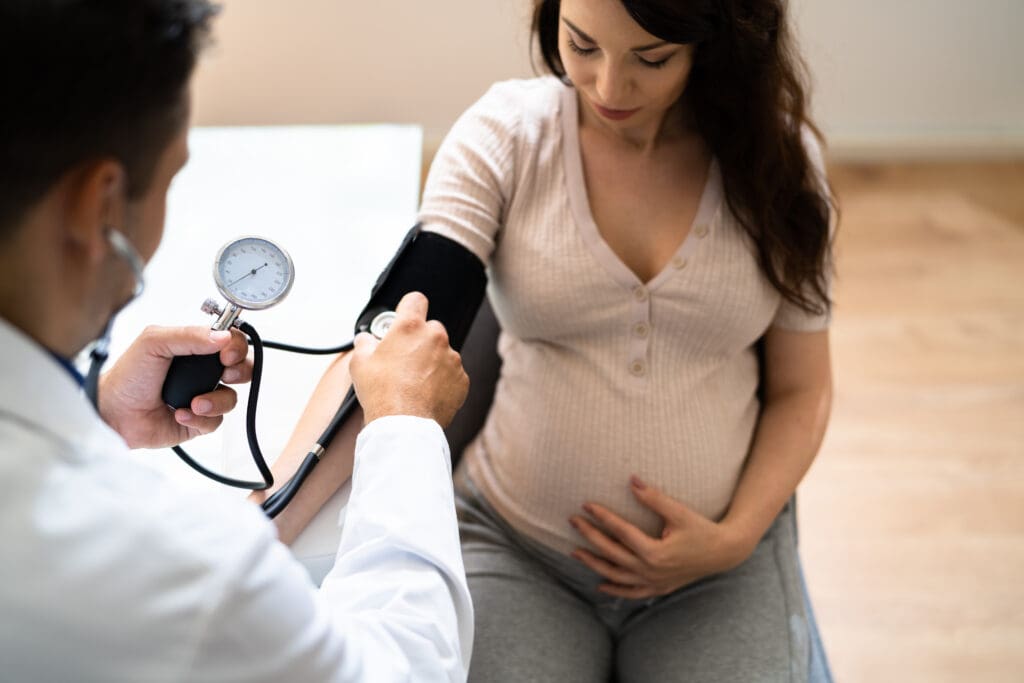
- Monitor you and baby more often through blood pressure checks
- Ask you to count baby’s kicks each day
- Order lab tests to measure your kidney and liver function
- Check baby’s growth and heart rate with ultrasounds and fetal heart monitoring
- Have you admitted to the hospital for closer monitoring if your blood pressure rises
- Place you on a medication called magnesium sulfate to help prevent you from having a seizure (eclampsia) or other complications
- Recommend that you give birth to your baby early if your condition becomes dangerous for either of you
High blood pressure can be silent because you may not feel any of the symptoms listed above. Trust yourself because you know your body better than anyone else. If you’re worried about any symptoms or don’t feel like your usual self, call your pregnancy care provider or call 911.
High Blood Pressure Complications
It’s important to understand that if you’re blood pressure remains high during pregnancy, it can lead to complications.
For You:
- Labor induction
- Placenta separating from the wall of your uterus
- Cesarean birth
- Postpartum hemorrhage
- Higher risk of heart and kidney disease later in life
- Stroke
- Death
For Baby:
- Birth before 37 weeks of pregnancy (preterm)
- Low birth weight (less than 5 pounds and 8 ounces)
- Stillbirth
- Pass away soon after being born
Ultimately, as you manage your blood pressure during pregnancy with your provider, you both want to lower your risks as much as possible. In doing so, your baby has more time to grow. Continue watching out for the symptoms of preeclampsia as they can occur postpartum after about six weeks.
FURTHER READING: Learn About Periodic Fetal Heart Monitoring Options