








Pregnancy, childbirth, and bonding with your new baby should be an exciting and joyful time for your family. However, you may be uneasy about the high rates of maternal complications and deaths in the U.S. What you feel is understandable because the physical, emotional, and mental health changes that you experience when you birth a child can affect your health for a lifetime.
It’s crucial to know how to advocate for yourself when communicating with many different healthcare providers during pregnancy, while giving birth, and recovering postpartum (e.g., obstetricians, midwives, neonatologists). Below are questions designed to empower your discussions with your pregnancy care provider(s).
Before 20 Weeks of Pregnancy
- Where should I go or who should I call if I have significant bleeding or pain?
- Does the prenatal care clinic have an after-hours phone number that I can call with concerns?
- How can I reduce my chances of developing preeclampsia (high blood pressure in pregnancy)?
From 20 Weeks of Pregnancy to Birth
- Are childbirth classes offered so I can learn more about vaginal and/or cesarean birth?
- Can I tour the birthing facility (including virtually) and learn more about the hospital/birthing center policies (e.g., registration, arrival time, eating in labor)?
- What is the visitor policy?
- Will the midwife or provider I’ve been seeing for most of my prenatal care visits be the one who is there when I give birth?
- Am I a good candidate to have a vaginal birth after cesarean?
- Can I have a say in who is present in the room when I give birth (e.g., medical/nursing students, other providers, baby nurse advocates)?
- Can I choose the birthing positions that I prefer?
- I’ll bring copies of my birth plan to discuss during my prenatal care appointments. Will my preferences be honored when I give birth (e.g., delayed cord clamping and skin-to-skin care)?
- Can I choose to receive pain medication or not? What are the non-medicine options available for coping with labor pain (e.g., music, bath or shower, aromatherapy)?
- Can I decide before I have my baby what form of birth control I’ll use after birth?
During Labor and Birth
- Will my healthcare providers share my vital signs, such as my blood pressure, temperature, and other measures of how I’m doing?
- Will my provider explain to me if they think my baby is experiencing complications?
- How often will I receive cervical checks? Is it necessary to have cervical checks as long as the baby and I are doing ok?
- Do I have to have an IV? If so, what fluids will I receive and what’s their purpose ?
- Will you share with me the total amount of blood that I lost during the birth?
- If my baby needs to be taken to the neonatal intensive care unit (NICU), can they be given human milk?
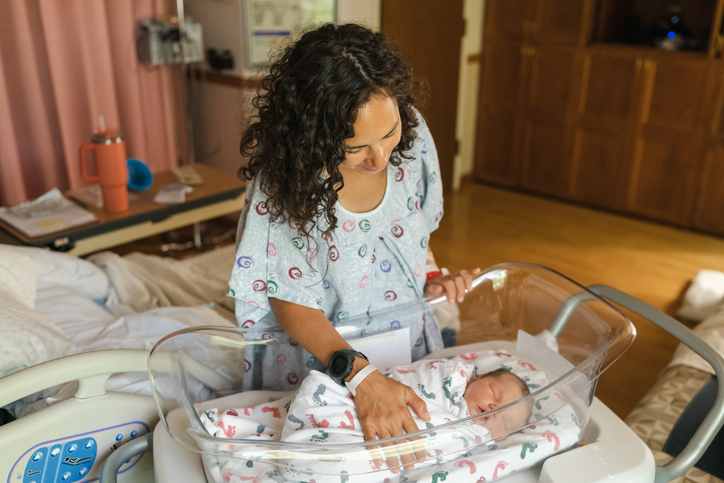
Postpartum Before Going Home
- How can I reduce any pain or discomfort that I feel?
- Can you discuss with me any complications I need to be mindful of like vaginal tears or if my blood pressure is high?
- Are all the medications that I take safe and at the correct dose if I am breastfeeding?
- When should I schedule my first postpartum check-up?
- Post birth, how long will the bleeding last and how will it change over time?
Postpartum Follow Up Appointments
- What are the signs of depression and anxiety that my family and I should be on the lookout for?
- When is it safe to resume sexual activity?
- Are all the medications that I take safe and at the correct dose if I am breastfeeding?
- Ask this question when seeing a healthcare provider like a dentist or dermatologist after having your baby and tell them when you gave birth.
Warning Signs
Once you’re home and settling into life with your new baby, keep in mind that it’s possible to have complications for up to one year after giving birth. Listen to your gut if you’re not feeling well.
Call 911 immediately or go to your closest emergency room if you have any of these warning signs:
- Pain in your chest
- Obstructed (difficulty) breathing or shortness of breath
- Seizures
- Thoughts of hurting yourself or someone else
Call your healthcare provider if you have any of these symptoms:
- Bleeding that soaks through 1 pad in an hour or blood clots the size of an egg or larger
- Incision that is not healing (cesarean or perineal)
- Red or swollen leg that is painful or warm to the touch
- Temperature of 100.4°F or higher or 96.8°F or lower
- Headache that does not get better (even with medicine) or a bad headache with vision changes
If you’re unable to speak with your midwife or pregnancy care provider, go to your closest emergency room.
Know What’s At Stake

It’s important to remember that YOU are the most important person on your healthcare team. You should be informed about what’s going on and included in making decisions about you and your baby’s care. If you or your support person have any concerns or feel like your safety is in question, speak up and tell your nurse, midwife or provider. Speak up and keep asking questions until you’re satisfied with the response.
There’s so much at stake involving your maternal health: Your freedom and autonomy to make informed choices, your thriving community that values your well-being, and the lives of all your family and friends who would be affected if you were harmed.
When we consider what is at stake, we remember that #MaternalHealthAwarenessDay is every day.
YOU MAY ALSO LIKE: Ask About Pain Relief Options for IUD Insertion