
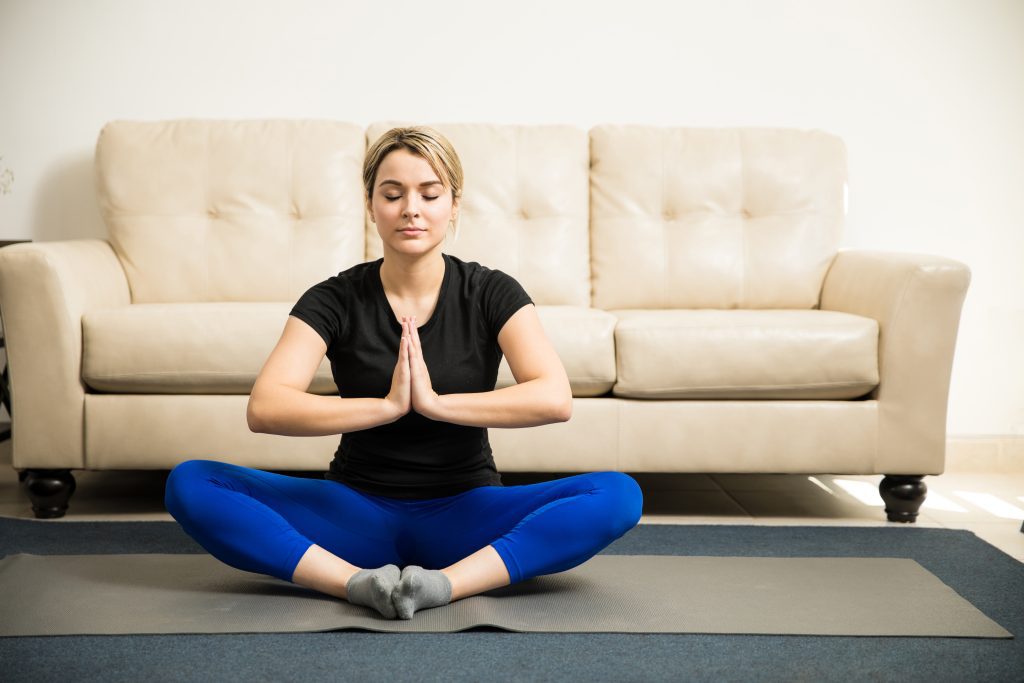







Increased family care, social isolation, uncertainty, illness, grief, job loss . . . the effects of the SARS-COV-19 pandemic are wide reaching. If you’re at your tipping point, you’re not alone. Women’s health researchers at Yale University are asking if everyone—especially women—may now be experiencing what could be considered post-traumatic stress disorder.
“As clinicians, when we ask about symptoms of PTSD, it’s always in reference to a specific traumatic event, with a significant level of shock,” says Dr. Mathilde Husky, a professor at the University of Bordeaux and a lead author of a study on classifying the pandemic’s effect on mental health in conjunction with colleagues at Yale.
“In the context of a pandemic that is nearing two years in length, if I ask someone if they are experiencing flashbacks, the question becomes: flashbacks of what? Are they avoiding cues in their environment or situations that would expose them to things that would remind them of the event? Some people report a singular traumatic event in the context of the pandemic, but many do not,” she said.”
While you may not have full-on PTSD, tips for coping with extreme stressors are relevant as we continue to experience the effects of coronavirus:
- Practice relaxing—try deep breathing, stretching, yoga, and mindfulness in your day
- Get outside—no matter the season, take a walk outdoors to reconnect with the natural environment, which boosts mental health
- Talk to someone you trust—sometimes just expressing your frustrations can be a huge relief, especially when you find those same stressors are shared by others
- Practice positivity—and seek out positive people
- Avoid alcohol and drugs, which may actually make you feel worse
Meditate to Make Fewer Mistakes
Here’s something that’s healthy for you and that improves your overall mental performance: Just one session of active meditation—being aware of your feelings, thoughts and bodily sensations as you focus—boosts your brain activity that helps you recognize and respond to errors more quickly.
Researchers working with 200 individuals engaged in a 20-minute guided meditation while researchers monitored their brain wave activity. What researchers observed was “what just 20 minutes of meditation can do to enhance the brain’s ability to detect and pay attention to mistakes,” said Jason Moser of Michigan State University.
“It makes us feel more confident in what mindfulness meditation might really be capable of for performance and daily functioning right there in the moment.”
YOU MAY ALSO LIKE: Managing Family & Visitors During COVID-19